
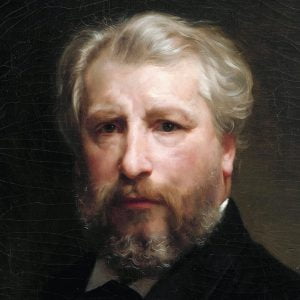

William-Adolphe Bouguereau
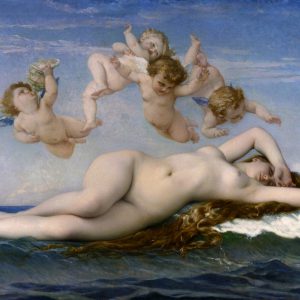
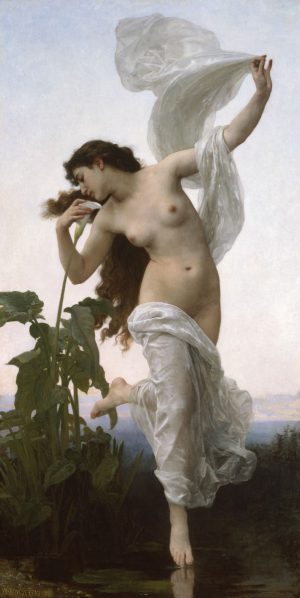
L’aurore (Dawn) by William-Adolphe Bouguereau 100% Hand Painted Oil Painting Reproduction
William-Adolphe Bouguereau
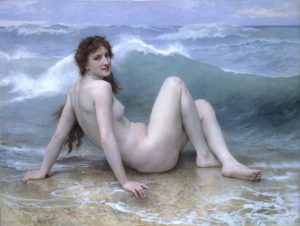
William-Adolphe Bouguereau
Wave by William-Adolphe Bouguereau 100% Hand Painted Oil Painting Reproduction
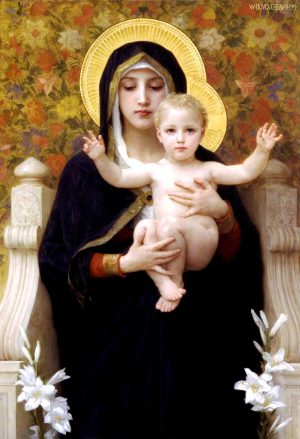
William-Adolphe Bouguereau
The Madonna of the Lilies by William-Adolphe Bouguereau 100% Hand Painted Oil Painting Reproduction
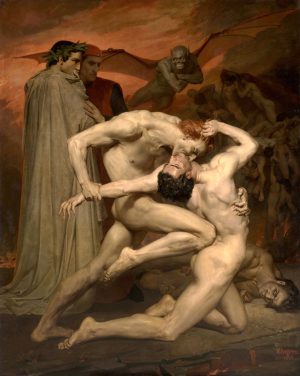
William-Adolphe Bouguereau
Dante and Virgil in Hell by William-Adolphe Bouguereau 100% Hand Painted Oil Painting Reproduction
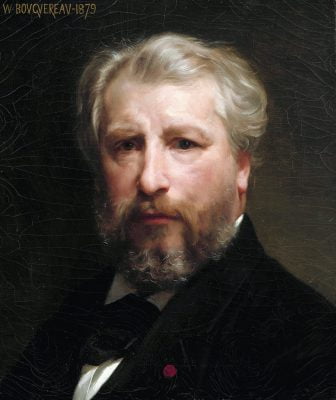 William-Adolphe Bouguereau (French pronunciation: [wijam.adɔlf buɡ(ə)ʁo]; November 30, 1825 – August 19, 1905) was a French academic painter. In his realistic genre paintings he used mythological themes, making modern interpretations of classical subjects, with an emphasis on the female human body. During his life he enjoyed significant popularity in France and the United States, was given numerous official honors, and received top prices for his work. As the quintessential salon painter of his generation, he was reviled by the Impressionist avant-garde. By the early twentieth century, Bouguereau and his art fell out of favor with the public, due in part to changing tastes. In the 1980s, a revival of interest in figure painting led to a rediscovery of Bouguereau and his work. Throughout the course of his life, Bouguereau executed 822 known finished paintings, although the whereabouts of many are still unknown.
William-Adolphe Bouguereau was born in La Rochelle, France, on November 30, 1825, into a family of wine and olive oil merchants. The son of Théodore Bouguereau (born 1800) and Marie Bonnin (1804), known as Adeline, William was brought up a Catholic. He had an older brother, Alfred, and a younger sister, Marie (known as Hanna), who died when she was seven. The family moved to Saint-Martin-de-Ré in 1832. Another sibling was born in 1834, Kitty. At 12 the boy went to Mortagne to stay with his uncle Eugène, a priest, and developed a love of nature, religion and literature. In 1839 he was sent to study the priesthood at a Catholic college in Pons. Here he was taught to draw and paint by Louis Sage who had studied under Ingres. William reluctantly left his studies to return to his family, now residing in Bordeaux. Here the boy met a local artist, Charles Marionneau, and commenced at the Municipal School of Drawing and Painting in November, 1841. William also worked as a shop assistant, hand-colouring lithographs and making small paintings that were reproduced using chromolithography. He was soon the best pupil in his class and decided to become an artist in Paris. To fund the move, he sold portraits – 33 oils in three months. All were unsigned and only one has been traced. He arrived in Paris aged 20 in March 1846.
Bouguereau became a student at the École des Beaux-Arts. To supplement his formal training in drawing, he attended anatomical dissections and studied historical costumes and archeology. He was admitted to the studio of François-Édouard Picot, where he studied painting in the academic style. Dante and Virgil in Hell (1850) was an early example of his great, Neo-Classical works. Academic painting placed the highest status on historical and mythological subjects and Bouguereau won the coveted Prix de Rome at age 26 in 1850, with his Zenobia Found by Shepherds on the Banks of the Araxes. His reward was a three-year residence at the Villa Medici in Rome, Italy, where in addition to formal lessons he was able to study first-hand the Renaissance artists and their masterpieces, as well as Greek, Etruscan, and Roman antiquities. He also studied classical literature, which influenced his subject choice for the rest of his career.
In April 1848 the young artist entered the Prix de Rome contest. Soon after work began there were riots in Paris and Bouguereau enrolled in the National Guard. After an unsuccessful attempt to win the prize, he entered again in 1849. Following 106 days of competition he again failed to win. His third attempt commenced in April 1850 and five months later he heard he had won a joint first prize. Along with other category winners, William set off for Rome in December and finally arrived at the Villa Medici in January 1851. He explored the city, making sketches and watercolours as he went. He walked to Naples and on to Capri, Amalfi and Pompeii. Still based in Rome and working hard on course work there were more explorations of Italy in 1852. Although the artist bore a strong admiration for all traditional art, he particularly revered Greek sculpture, Leonardo da Vinci, Raphael, Michelangelo, Titian, Rubens and Delacroix. In April 1854 he left Rome and returned to La Rochelle.
Bouguereau, painting within the traditional academic style, exhibited at the annual exhibitions of the Paris Salon for his entire working life. An early reviewer stated, “M. Bouguereau has a natural instinct and knowledge of contour. The eurythmie of the human body preoccupies him, and in recalling the happy results which, in this genre, the ancients and the artists of the sixteenth century arrived at, one can only congratulate M. Bouguereau in attempting to follow in their footsteps … Raphael was inspired by the ancients … and no one accused him of not being original.”
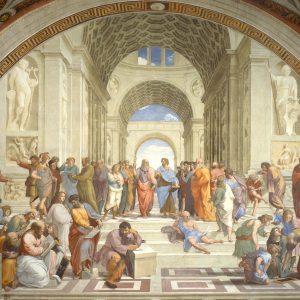
Raphael was a favorite of Bouguereau and he took this review as a high compliment. He had fulfilled one of the requirements of the Prix de Rome by completing an old-master copy of Raphael’s The Triumph of Galatea. In many of his works, he followed the same classical approach to composition, form, and subject matter. Bouguereau’s graceful portraits of women were considered very charming, partly because he could beautify a sitter while also retaining her likeness.