
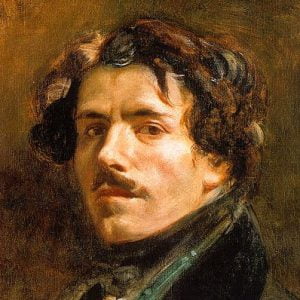

Eugene Delacroix
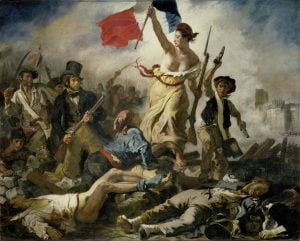
The Liberty Leading the People by Eugene Delacroix 100% Hand Painted Oil Painting Reproduction
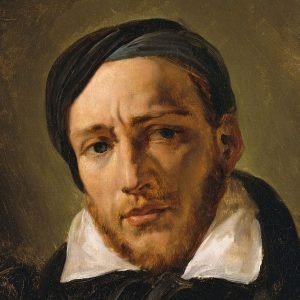
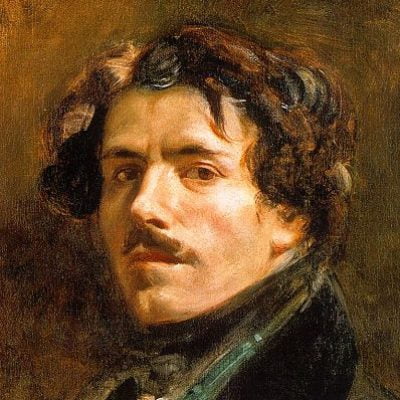 Ferdinand Victor Eugene Delacroix (26 April 1798 – 13 August 1863) was a French Romantic artist regarded from the outset of his career as the leader of the French Romantic school.
As a painter and muralist, Delacroix’s use of expressive brushstrokes and his study of the optical effects of colour profoundly shaped the work of the Impressionists, while his passion for the exotic inspired the artists of the Symbolist movement. A fine lithographer, Delacroix illustrated various works of William Shakespeare, the Scottish author Walter Scott and the German author Johann Wolfgang von Goethe.
In contrast to the Neoclassical perfectionism of his chief rival Ingres, Delacroix took for his inspiration the art of Rubens and painters of the Venetian Renaissance, with an attendant emphasis on colour and movement rather than clarity of outline and carefully modelled form. Dramatic and romantic content characterized the central themes of his maturity, and led him not to the classical models of Greek and Roman art, but to travel in North Africa, in search of the exotic. Friend and spiritual heir to Théodore Géricault, Delacroix was also inspired by Lord Byron, with whom he shared a strong identification with the “forces of the sublime”, of nature in often violent action.
However, Delacroix was given to neither sentimentality nor bombast, and his Romanticism was that of an individualist. In the words of Baudelaire, “Delacroix was passionately in love with passion, but coldly determined to express passion as clearly as possible.”
Eugène Delacroix was born on 26 April 1798 at Charenton-Saint-Maurice in Île-de-France, near Paris. His mother was named Victoire, daughter of the cabinet-maker Jean-François Oeben. He had three much older siblings. Charles-Henri Delacroix (1779–1845) rose to the rank of General in the Napoleonic army. Henriette (1780–1827) married the diplomat Raymond de Verninac Saint-Maur (1762–1822). Henri was born six years later. He was killed at the Battle of Friedland on 14 June 1807.
There is reason to believe that Eugène’s father, Charles-François Delacroix, was infertile at the time of Eugène’s conception and that his real father was Talleyrand, who was a friend of the family and successor of Charles Delacroix as Minister of Foreign Affairs, and whom the adult Eugène resembled in appearance and character. Throughout his career as a painter, he was protected by Talleyrand, who served successively the Restoration and king Louis-Philippe, and ultimately as ambassador of France in Great Britain, and later by Talleyrand’s grandson, Charles Auguste Louis Joseph, duc de Morny, half-brother of Napoleon III and speaker of the French House of Commons. His presumed father, Charles Delacroix, died in 1805, and his mother in 1814, leaving 16-year-old Eugène an orphan.
His early education was at the Lycée Louis-le-Grand, and at the Lycée Pierre Corneille in Rouen where he steeped himself in the classics and won awards for drawing. In 1815 he began his training with Pierre-Narcisse Guérin in the neoclassical style of Jacques-Louis David. An early church commission, The Virgin of the Harvest (1819), displays a Raphael-esque influence, but another such commission, The Virgin of the Sacred Heart (1821), evidences a freer interpretation. It precedes the influence of the more colourful and rich style of the Flemish painter Peter Paul Rubens (1577–1640), and fellow French artist Théodore Géricault (1791–1824), whose works marked an introduction to Romanticism in art.
The impact of Géricault’s The Raft of the Medusa was profound, and stimulated Delacroix to produce his first major painting, The Barque of Dante, which was accepted by the Paris Salon in 1822. The work caused a sensation, and was largely derided by the public and officialdom, yet was purchased by the State for the Luxembourg Galleries; the pattern of widespread opposition to his work, countered by a vigorous, enlightened support, would continue throughout his life. Two years later he again achieved popular success for his The Massacre at Chios.
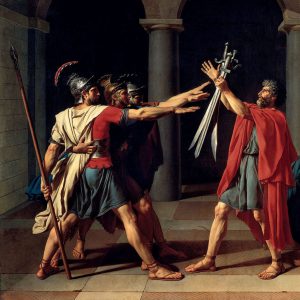
Delacroix’s painting of the massacre at Chios shows sick, dying Greek civilians about to be slaughtered by the Turks. One of several paintings he made of this contemporary event, it expresses sympathy for the Greek cause in their war of independence against the Turks, a popular sentiment at the time for the French people. Delacroix was quickly recognized as a leading painter in the new Romantic style, and the picture was bought by the state. His depiction of suffering was controversial, however, as there was no glorious event taking place, no patriots raising their swords in valour as in David’s Oath of the Horatii, only a disaster. Many critics deplored the painting’s despairing tone; the artist Antoine-Jean Gros called it “a massacre of art”. The pathos in the depiction of an infant clutching its dead mother’s breast had an especially powerful effect, although this detail was condemned as unfit for art by Delacroix’s critics. A viewing of the paintings of John Constable and the watercolour sketches and art of Richard Parkes Bonnington prompted Delacroix to make extensive, freely painted changes to the sky and distant landscape.