






Sandro Botticelli
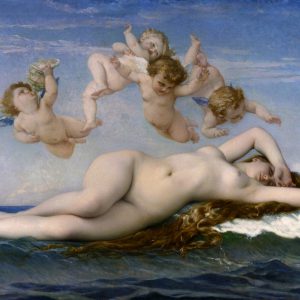
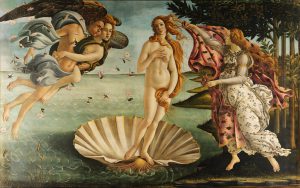
The Birth of Venus by Sandro Botticelli 100% Hand Painted Oil Painting Reproduction
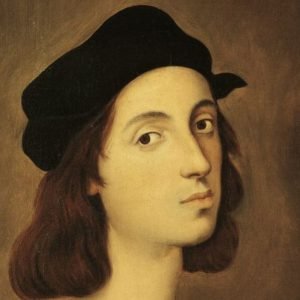
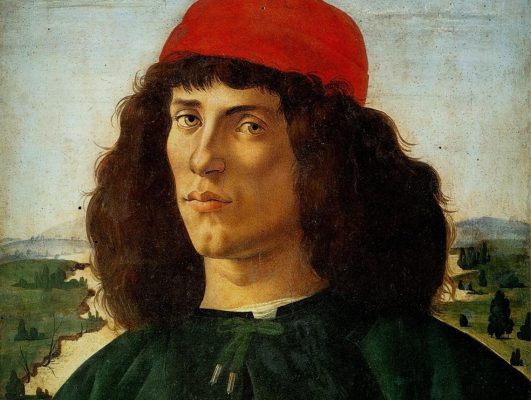 Alessandro di Mariano di Vanni Filipepi, known as Sandro Botticelli (Italian: [ˈsandro bottiˈtʃɛlli]; c. 1445 – May 17, 1510), was an Italian painter of the Early Renaissance. He belonged to the Florentine School under the patronage of Lorenzo de’ Medici, a movement that Giorgio Vasari would characterize less than a hundred years later in his Vita of Botticelli as a “golden age”. Botticelli’s posthumous reputation suffered until the late 19th century; since then, his work has been seen to represent the linear grace of Early Renaissance painting.
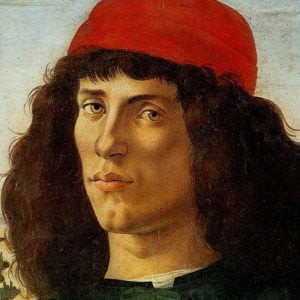
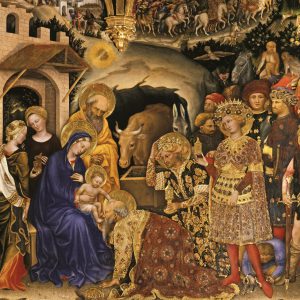
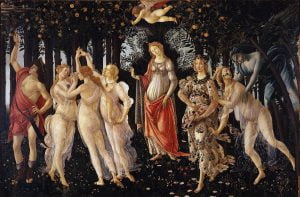
As well as the small number of mythological subjects which are his best known works today, he painted a wide range of religious subjects and also some portraits. He and his workshop were especially known for their Madonna and Childs, many in the round tondo shape. Botticelli’s best-known works are The Birth of Venus and Primavera, both in the Uffizi in Florence. He lived all his life in the same neighbourhood of Florence, with probably his only significant time elsewhere the months he spent painting in Pisa in 1474 and the Sistine Chapel in Rome in 1481–82.
Only one of his paintings is dated, though others can be dated from other records with varying degrees of certainty, and the development of his style traced with confidence. He was an independent master for all the 1470s, growing in mastery and reputation, and the 1480s were his most successful decade, when all his large mythological paintings were done, and many of his best Madonnas. By the 1490s his style became more personal and to some extent mannered, and he could be seen as moving in a direction opposite to that of a new generation of painters, creating the High Renaissance style just as Botticelli returned in some ways to the Gothic.
He has been described as “an outsider in the mainstream of Italian painting”, who had a limited interest in many of the developments most associated with Quattrocento painting, such as the realistic depiction of human anatomy, perspective, and landscape, and the use of direct borrowings from classical art. His training enabled him to represent all these aspects of painting, without contributing to their development.
Botticelli was born in the city of Florence in a house in the street still called Via Borgo Ognissanti. He was to live within a minute or two’s walk of this all his life, and to be buried in the Ognissanti (“All Saints”) parish church. His father was Mariano di Vanni d’Amedeo Filipepi, and Sandro was the youngest of his four children to survive into adulthood, all boys. The date of his birth is not known, but his father’s tax returns in following years give his age as two in 1447 and thirteen in 1458 so, allowing for arguments as to what these statements really meant, dates between 1444 and 1446 are given.
His father was a tanner until 1460, before joining his son Antonio in a new business as a beater-out of gold leaf, which would have brought them into contact with artists. Vasari reported that Botticelli was initially trained as a goldsmith. He perhaps became an apprentice when he was about fourteen years old, which may indicate that he received a fuller education than many other Renaissance artists.
The Ognissanti neighbourhood was mostly “a modest one, inhabited by weavers and other workmen”, but there were some rich families, notably the very rich Rucellai, bankers and wool-merchants, headed by Giovanni di Paolo Rucellai, whose Palazzo Rucellai by Leon Battista Alberti, a landmark in Italian Renaissance architecture, was being built between about 1446 and 1451, Botticelli’s earliest years. By 1458 Botticelli’s family had moved to the same street as this, and were renting their house from another Rucellai, and there were other dealings involving the two families.
In 1464 his father bought a house in Via Nuova nearby (modern Via della Porcellana), which Sandro returned to live in from 1470, if not before, and where he remained for the rest of his life. He both lived and had his workshop in the house, by now a rather unusual practice, despite his brother Giovanni and his family also being in residence (and later another brother, Simone). Here the notable family on the street were the Vespucci, including Amerigo Vespucci, born in 1454, after whom the Americas were named. The Vespucci were close Medici allies, and would become regular patrons of Botticelli. The name Botticelli, meaning “little barrel” came from his brother Giovanni’s nickname of “Botticello”, “apparently from an unfortunate resemblance”. By 1470 a document referred to the painter as “Sandro Mariano Botticelli”, and it became his customary surname.
From around 1461 or 1462 Botticelli was apprenticed to Fra Filippo Lippi, one of the top Florentine painters of the day, and one often patronized by the Medicis. He was rather conservative in many respects, but gave Botticelli a solid training in the Florentine style and technique of the day, in panel painting, fresco, and drawing. Botticelli’s paintings avoided technical short-cuts throughout his life, and when well treated they have survived in good condition for their age. Elements in style and compositions that are reminiscent of Lippi also continue to appear throughout his career. For this period Lippi was in fact based in Prato, just outside Florence, painting what is now Prato Cathedral, and it is there that Botticelli was trained. He had probably left Lippi by April 1467, when the master went to work in Spoleto.