

Louis-Jean-Francois Lagrenee
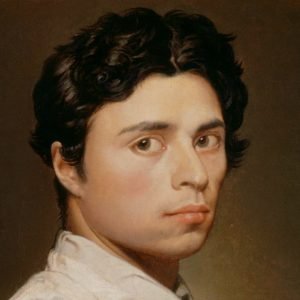
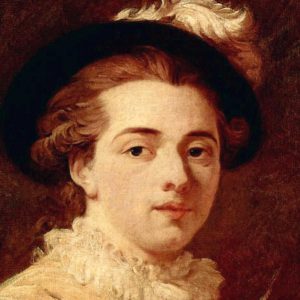
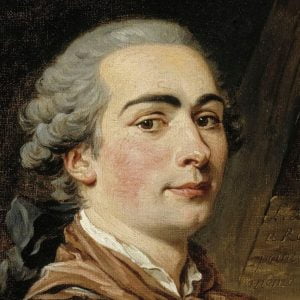
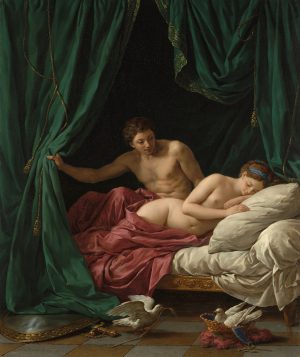
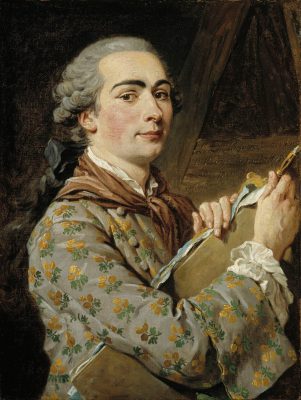 Louis-Jean-Francois Lagrenee (a.k.a. Lagrenee the elder) (30 December 1724 – 19 June 1805) was a French rococo painter and student of Carle van Loo. He won the Grand Prix de Rome for painting in 1749 and was elected a member of the Académie royale de peinture et de sculpture in 1755. His younger brother Jean-Jacques Lagrenée (a.k.a. Lagrenée the younger) was also a painter.
Lagrenée was born in Paris on 30 December 1724 and from an early age he showed promise in drawing and painting. During his youth, master painter members of the French Royal Academy offered a rolling programme of courses, open to the public (for a small fee), in life drawing and the principles and techniques of art. These courses gave academy members a chance to identify and nurture six of the most gifted young students in any given year and offer them a place on a scheme known as the École royale des élèves protégés, a scheme which offered free tuition with a small stipend, for three years, preparing students for Prix de Rome competitions. After being selected for and completing this three-year programme, under the tutelage of Carle van Loo, Lagrenée won the Grand Prix de Rome on his first attempt in 1749, with the painting Joseph interpreting the dreams of Pharaoh (now lost).
After returning from Rome in 1753, Lagrenée set to work on a large painting – The abduction of Dejaneira by the centaur Nessus (musée du Louvre) – which, when finished in 1755, was the reception piece which earned him membership of the Académie de peinture et de sculpture, by a unanimous vote. By this time, Lagrenée was already considered something of a celebrity.
Lagrenée’s career blossomed in Paris, by completing many commissions for eminent patrons and members of a flourishing new financial community as well as submitting regular entries to Paris salon exhibitions. His reputation caught the attention of Elizabeth Petrovna, Empress of Russia, who, in 1760, appointed him to the office of the director of the Academy at St. Petersburg and that of her principle painter.
After only two years in Russia, Lagrenée returned to Paris to take up the appointment of professor-rector of the Académie royale de peinture et de sculpture.
Lagrenée spent the years between 1781 and 1787 at the Villa Medici in Rome, in his capacity as director of the French Academy (Académie de France à Rome).
A final return to Paris saw Lagrenée appointed to the position of honorary curator-director (administration) of the Louvre museum, a position which he held until his death in 1805.