
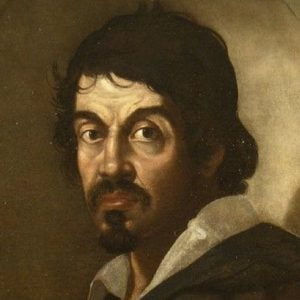
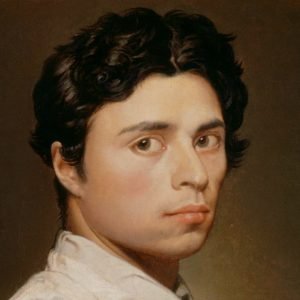
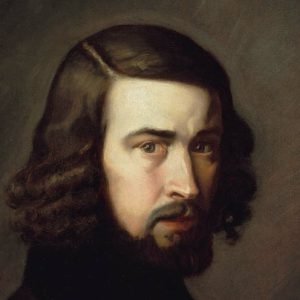
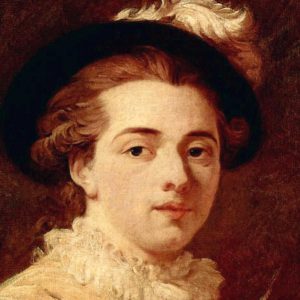
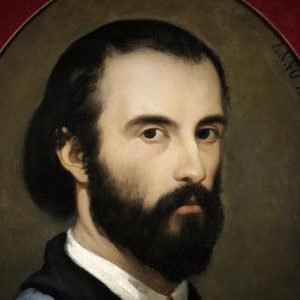

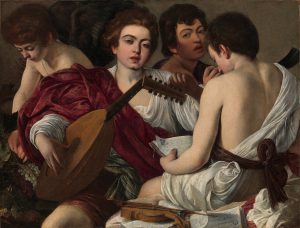
Merisi da 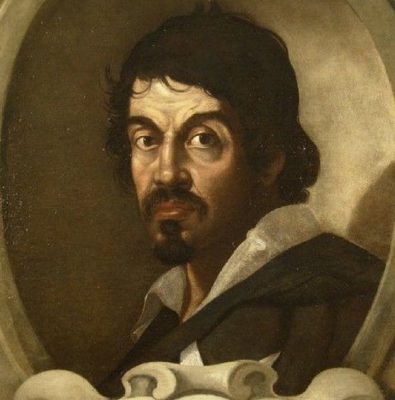 Caravaggio ( 29 September 1571 – 18 July 1610) was an Italian painter active in Rome for most of his artistic life. During the final four years of his life he moved between Naples, Malta, and Sicily until his death. His paintings combine a realistic observation of the human state, both physical and emotional, with a dramatic use of lighting, which had a formative influence on Baroque painting.
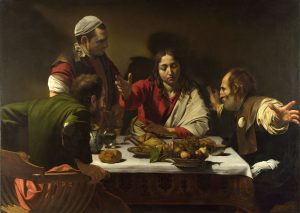
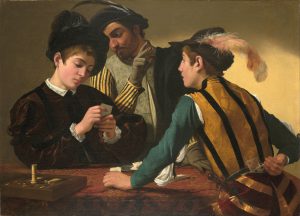
Caravaggio employed close physical observation with a dramatic use of chiaroscuro that came to be known as tenebrism. He made the technique a dominant stylistic element, darkening shadows and transfixing subjects in bright shafts of light. Caravaggio vividly expressed crucial moments and scenes, often featuring violent struggles, torture, and death. He worked rapidly, with live models, preferring to forgo drawings and work directly onto the canvas. His influence on the new Baroque style that emerged from Mannerism was profound. It can be seen directly or indirectly in the work of Peter Paul Rubens, Jusepe de Ribera, Gian Lorenzo Bernini, and Rembrandt, and artists in the following generation heavily under his influence were called the “Caravaggisti” or “Caravagesques”, as well as tenebrists or tenebrosi (“shadowists”).
Caravaggio trained as a painter in Milan before moving in his twenties to Rome. He developed a considerable name as an artist, and as a violent, touchy and provocative man. A brawl led to a death sentence for murder and forced him to flee to Naples. There he again established himself as one of the most prominent Italian painters of his generation. He traveled in 1607 to Malta and on to Sicily, and pursued a papal pardon for his sentence. In 1609 he returned to Naples, where he was involved in a violent clash; his face was disfigured and rumours of his death circulated. Questions about his mental state arose from his erratic and bizarre behavior. He died in 1610 under uncertain circumstances while on his way from Naples to Rome. Reports stated that he died of a fever, but suggestions have been made that he was murdered or that he died of lead poisoning.
Caravaggio’s innovations inspired Baroque painting, but the Baroque incorporated the drama of his chiaroscuro without the psychological realism. The style evolved and fashions changed, and Caravaggio fell out of favor. In the 20th century interest in his work revived, and his importance to the development of Western art was reevaluated. The 20th-century art historian André Berne-Joffroy stated, “What begins in the work of Caravaggio is, quite simply, modern painting.”
Caravaggio is another one of the artists who are widely known by only a single name. In this case, it isn’t even his first, or last name. Michelangelo Merisi was called Caravaggio after his hometown in Lombardy. Artists from the Lombardy area were widely known for their realistic style of painting and also for the beautiful still life paintings they produced. Caravaggio isn’t known for still life painting, though he is known for his fantastic, highly realistic paintings.
Reactions to Caravaggio in his own time were very mixed. When he first began painting, Caravaggio only painted for a small circle of people, largely in Rome. His fame grew and soon Caravaggio found himself with many patrons and produced great numbers of religiously themed paintings for them, a vastly different subject from the mostly secular paintings of his early career.
One of Caravaggio’s religious pieces is The Conversion on the Way to Damascus which is also sometimes called The Conversion of St. Paul. This is the moment with Saul becomes St. Paul. The story is that on the way to Damascus Saul fell on the road and heard the voice of God call to him from heaven. Moved by the experience Saul, who once was a persecutor of Christians, dedicated his life to preaching the message of God. In the painting, Paul in lying on the ground, arms stretched up to heaven. A horse and its owner step over the man as he lies on the road, completely unaware of the sacred event taking place. A light streams down onto the saint from an unseen source and is supposed to be the light of God.
Besides being naturalistic, Caravaggio also relied very heavily on chiaroscuro in his work, that is, the play of light and shadow. All of his paintings have a light source, a place where we can see sunlight, candlelight or any other source of light emanating from. Shadows fall as they naturally would onto surfaces and people alike. In earlier times, these shadows would be lessened or left out entirely either because they were deemed unnecessary, they would obscure the face of a prominent figure in the painting. Caravaggio didn’t pick and choose who would get treated in a naturalistic way or not. Saint or pauper, ever figure was treated as a normal human being in his work.
It is this naturalistic approach that had many patrons up in arms. How dare he portray the great Saint Paul, and the myriad of other religious figures that he painted throughout his long career, as being just the same as any other common traveler on the roadside? They were different, they were special. But not to Caravaggio. Even the Saints, Apostles and Jesus were people, first and foremost, and were treated as such in his works. Caravaggio takes these biblical figures and makes them more real, more relatable and understandable to the viewer. This new approach, though rejected by so many in early1600s, would forever affect the portrayal of individuals in painting.