

Gilbert Stuart
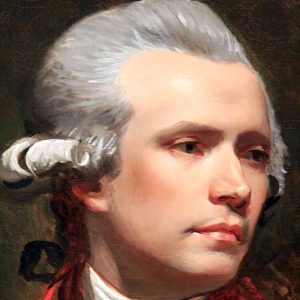
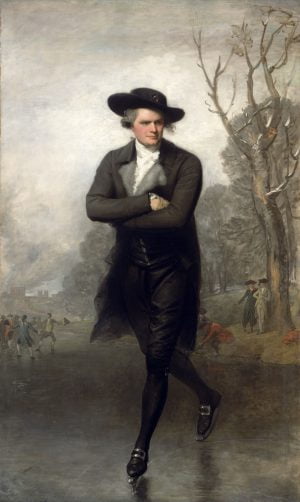
Portrait of A Gentleman Skating by Gilbert Stuart 100% Hand Painted Oil Painting Reproduction
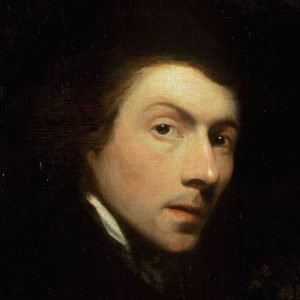
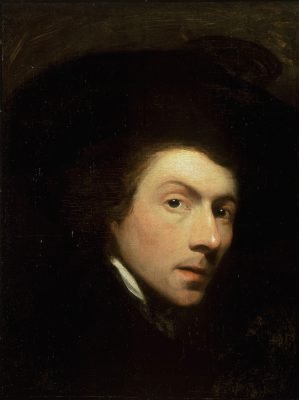 Gilbert Stuart (born Stewart; December 3, 1755 – July 9, 1828) was an American painter from Rhode Island.
Gilbert Stuart is widely considered one of America’s foremost portraitists. His best known work is the unfinished portrait of George Washington that is sometimes referred to as The Athenaeum, begun in 1796 and never finished. Stuart retained the portrait and used it to paint 130 copies which he sold for $100 each. The image of George Washington featured in the painting has appeared on the United States one-dollar bill for over a century, and on various U.S. postage stamps of the 19th century and early 20th century.
Throughout his career, Gilbert Stuart produced portraits of over 1,000 people, including the first six Presidents of the United States. His work can be found today at art museums throughout the United States and the United Kingdom, most notably the Metropolitan Museum of Art and Frick Collection in New York City, the National Gallery of Art in Washington, D.C., the National Portrait Gallery, London, Worcester Art Museum in Massachusetts, and the Museum of Fine Arts in Boston.
Gilbert Stuart was born on December 3, 1755 in Saunderstown, Rhode Island, a village of North Kingstown, and baptized at Old Narragansett Church on April 11, 1756. He was the third child of Gilbert Stewart, a Scottish immigrant employed in the snuff-making industry, and Elizabeth Anthony Stewart, a member of a prominent land-owning family from Middletown, Rhode Island. Stuart’s father worked in the first colonial snuff mill in America, which was located in the basement of the family homestead.
Gilbert Stuart moved to Newport, Rhode Island at the age of six, where his father pursued work in the merchant field. In Newport, Stuart first began to show great promise as a painter. In 1770, Stuart made the acquaintance of Scottish artist Cosmo Alexander, a visitor to the colonies who made portraits of local patrons and who became a tutor to Stuart. Under the guidance of Alexander, Stuart painted the famous portrait Dr. Hunter’s Spaniels when he was fourteen years old; it hangs today in the Hunter House Mansion in Newport. The painting is also referred to as Dr. Hunter’s Dogs by some accounts.
In 1771, Stuart moved to Scotland with Alexander to finish his studies; however, Alexander died in Edinburgh one year later. Stuart tried to maintain a living and pursue his painting career, but to no avail, so he returned to Newport in 1773.
Stuart’s prospects as a portraitist were jeopardized by the onset of the American Revolution and its social disruptions. Stuart departed for England in 1775 following the example set by John Singleton Copley. He was unsuccessful at first in pursuit of his vocation, but he then became a protégé of Benjamin West with whom he studied for the next six years. The relationship was beneficial, with Stuart exhibiting at the Royal Academy as early as 1777.
By 1782, Stuart had met with success, largely due to acclaim for The Skater, a portrait of William Grant. It was Stuart’s first full-length portrait and, according to art historian Margaret C. S. Christman, it “belied the prevailing opinion that Stuart ‘made a tolerable likeness of a face, but as to the figure, he could not get below the fifth button'”. Stuart said that he was “suddenly lifted into fame by a single picture”.
At one point, the prices for his pictures were exceeded only by those of renowned English artists Joshua Reynolds and Thomas Gainsborough. Despite his many commissions, however, Stuart was habitually neglectful of finances and was in danger of being sent to debtors’ prison. In 1787, he fled to Dublin, Ireland where he painted and accumulated debt with equal vigor.
Stuart ended his 18-year stay in Britain and Ireland in 1793, leaving behind numerous unfinished paintings. He returned to the United States and settled briefly in New York City. In 1795, he moved to Germantown, Pennsylvania, near (and now part of) Philadelphia, where he opened a studio. It was here that he gained a foothold in the art world and lasting fame with pictures of many important Americans of the day.
Stuart painted George Washington in a series of iconic portraits, each of them leading in turn to a demand for copies, and keeping Stuart busy and highly paid for years. The most famous and celebrated of these likenesses is known as The Athenaeum and is currently portrayed on the United States one dollar bill. Stuart, along with his daughters, painted a total of 130 reproductions of The Athenaeum. However, he never completed the original version; after finishing Washington’s face, he kept the original version to make the copies. He sold up to 70 of his reproductions for a price of US$100 each, but the original portrait was left unfinished at the time of Stuart’s death in 1828. The painting was jointly purchased by the National Portrait Gallery and Museum of Fine Arts, Boston in 1980, and was on display in the National Portrait Gallery in Washington, D.C. in late 2014.